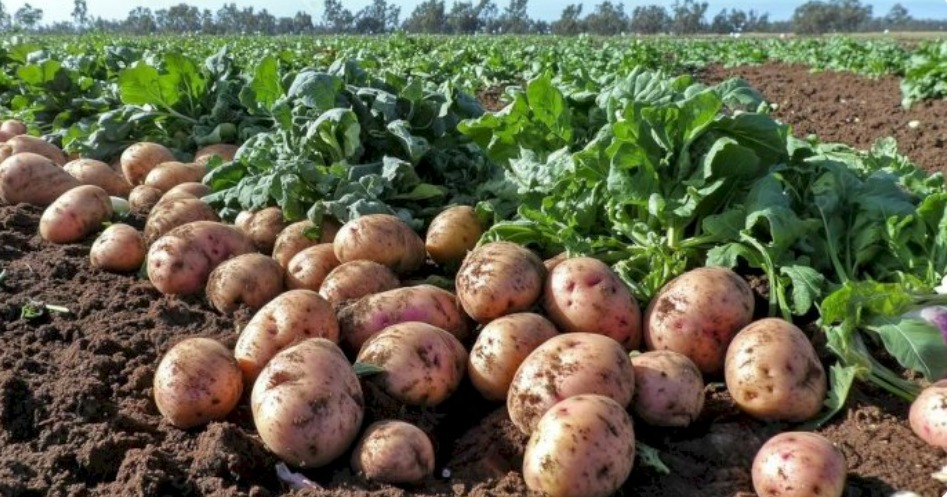
Potato cultivation in India remains a highly sensitive segment of agriculture, where output quality is closely tied to soil health, disease pressure, and seed tuber consistency. Despite large-scale cultivation across states such as Gujarat and Punjab, farmers continue to face persistent challenges, including soil-borne infections, uneven crop emergence, high rejection rates in processing-grade supply chains, and inconsistent yields, all of which impact productivity and commercial returns.
But with fries, chips, and finger snacks so deeply part of everyday consumption, how far has innovation really reached the farm level that powers this demand?
A science-led shift is now focusing on improving soil health through microbiome-based interventions aimed at enhancing seed performance, reducing disease incidence, improving germination uniformity, and stabilising processing-grade output in potato farming.
The approach begins at the pre-plant stage, where soil diagnostics are used to assess nutrient balance, microbial activity, and pathogen presence. Based on these insights, targeted biological treatments are applied for pre-plant soil conditioning, creating a more stable root-zone environment for seed tubers.
During the seed stage, microbial coatings and bio-based treatments are used to improve seed vigour and early establishment while reducing vulnerability to soil-borne infections. As the crop develops, root-zone biological strengthening supports nutrient uptake, stress resilience and plant uniformity, which are critical factors for processing-grade potato quality.
This system is being enabled through the collaboration between HyFarm and Hyderabad-based biotechnology firm Sri BioAesthetics Pvt. Ltd.
The first phase will implement the SoilFirst™ program, integrating soil diagnostics, pathogen mapping, pre-plant conditioning, microbial seed treatment, and root-zone strengthening. The focus will be on improving seed multiplication efficiency, plant emergence consistency, and processing recovery rates.
Trials will be conducted across 25 to 50 acres in Gujarat and Punjab, comparing treated and conventional plots to evaluate improvements in emergence, uniformity, disease reduction, and processing-quality output.
“Consistency in soil biology is becoming as important as seed quality in achieving predictable processing-grade output,” said S. Soundararadjane, Chief Executive Officer, HyFarm.
Meanwhile, KRK Reddy, Managing Director, Sri BioAesthetics Pvt. Ltd, said, “Bringing microbiome science into field-level application focuses on improving soil responsiveness and ensuring more consistent crop outcomes from the early stages of cultivation.”
The initiative signals a broader shift toward biology-led farming systems aimed at improving efficiency, yield stability, and long-term soil productivity across India’s potato value chain.
Got questions or experiences to share? Comment below or connect with me on Instagram @samuelmjosh and LinkedIn: https://www.linkedin.com/in/samuel-joshua-maddela-ab210b1b9