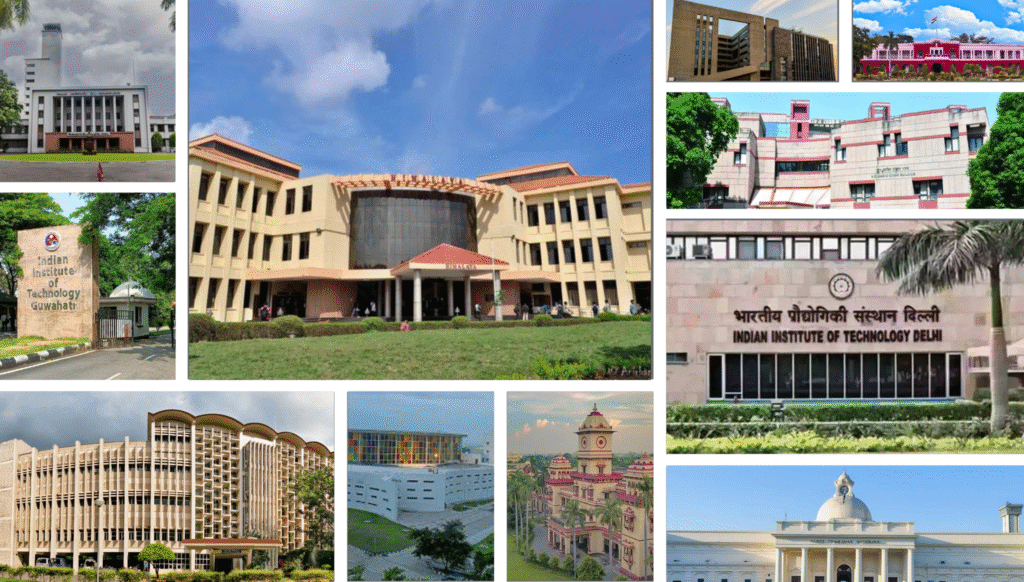
Once seen primarily as premier teaching institutions, the Indian Institutes of Technology (IITs) are increasingly positioning themselves as centres driving innovation, invention and technology development for society. Stressing the need for stronger industry-backed research, Prof. Mahendrakumar Madhavan, Dean, IIT Hyderabad, said Corporate Social Responsibility (CSR) funds should be permitted to support research and development, enabling institutions and industry to collaborate more effectively and accelerate technological innovation.
A full-day PanIIT Hyderabad Summit 2026, bringing together leaders from technology, governance and industry, was held on Sunday at The Westin, Madhapur, with more than 250 participants attending the event organised by PanIIT Alumni India, the umbrella body representing over five lakh IIT alumni worldwide.
Inaugurating the summit, Eatala Rajender, Member of Parliament, urged IITians to develop technologies for construction and development rather than destruction. He highlighted the growing role of the IIT ecosystem in expanding science and technology education and called for stronger collaboration between academia and industry to boost innovation.
In a series of discussions, speakers highlighted how technology, governance and research are shaping India’s future across sectors.
Sunil Kumar Barnwal, CEO, National Health Authority, said platforms such as India Stack and the Ayushman Bharat Digital Mission are helping integrate India’s fragmented healthcare system. Nearly 20 lakh claims are processed every month under PMJAY, supported by strong IT and fraud-control systems.
Navin Mittal, Special Chief Secretary (Energy), Government of Telangana, said renewable energy capacity surpassed conventional power capacity in December 2025, marking a major milestone in India’s energy transition. However, he cautioned that global geopolitical tensions could affect petroleum supplies, with India importing about 85% of its oil needs.
Dr. Tessy Thomas, former Director, DRDO, said space-based defence systems and artificial intelligence will define the future of warfare. Strengthening indigenous research and scientific talent, she added, will be crucial for advancing India’s defence and aerospace capabilities.

Bhavesh Mishra, Special Secretary, IT & Electronics Department, Government of Telangana, highlighted Hyderabad’s rapid rise as a Global Capability Centre (GCC) hub, accounting for 46% of new GCCs set up in 2025. The city now hosts around 60 GCCs, strengthening its role in technology and innovation.
India’s education system has evolved from science to applied science and advanced engineering, supporting national development, said Prof. Sukumar Mishra, Director, IIT (ISM) Dhanbad.
Meanwhile, global models of sustainable water management, including Singapore’s NEWater initiative, were highlighted by Prof. Venkappayya R. Desai, Director, IIT Dharwad..
Prabhat Kumar, IRS, Chairman, PanIIT Alumni India, said IIT alumni continue to play a key role in global technology leadership. He noted that the United States remains the largest destination for IIT talent, with many graduates leading multinational technology firms.
Hyderabad contributes nearly 16% of India’s software exports, with the sector growing three times faster than the national average. The city has emerged as a major technology and innovation hub, said Sudhakar Gande, Convener, PanIIT Hyderabad Summit 2026.
Got questions or experiences to share? Comment below or connect with me on Instagram @samuelmjosh and LinkedIn: https://www.linkedin.com/in/samuel-joshua-maddela-ab210b1b9